Warline: Sniper Strike
- 4.9
- Rating
- 5.00M
- Installs
- Free
- Price

 Analysis by App-foxy
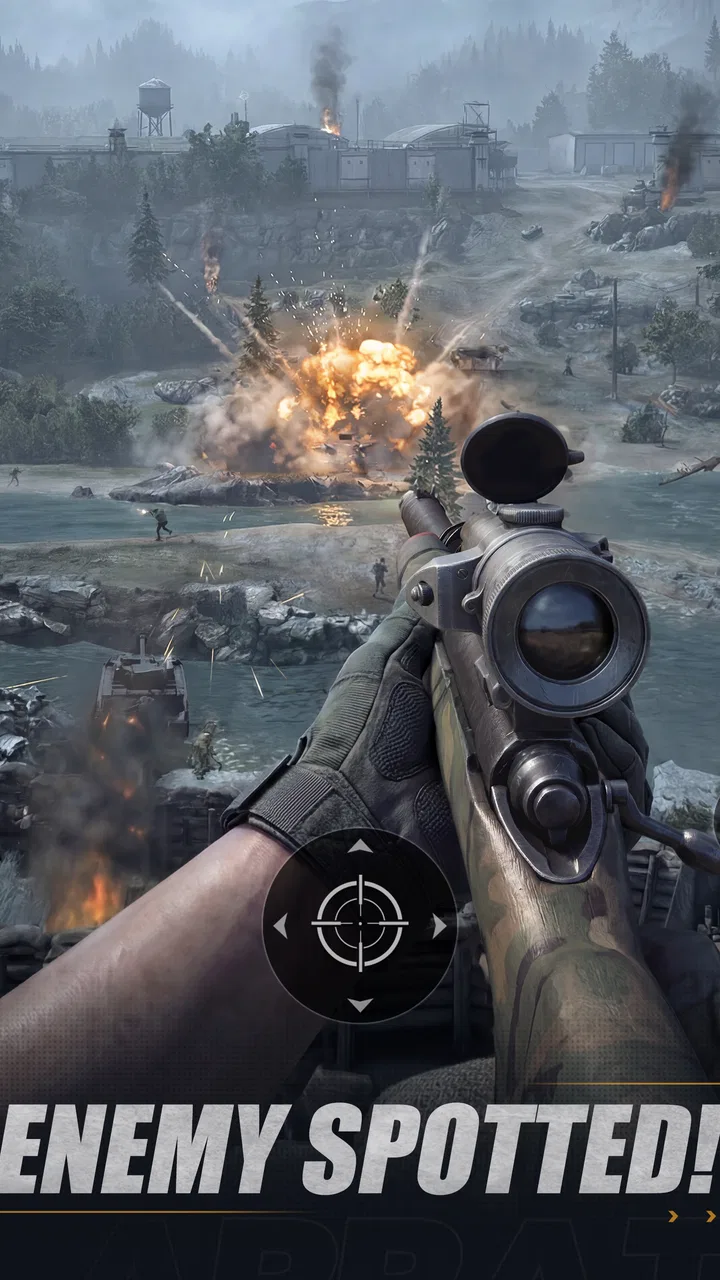
I approached Warline: Sniper Strike as a strategy game first, but its most interesting challenge is how much information it asks me to process while I am also trying to act quickly. Developed by Powerfantasy HK Limited, it combines battlefield decisions with sniper-style action instead of keeping those two activities in separate modes. That gives it a distinctive identity, although it also means that comfort, visual clarity, and reaction speed matter more than they do in a slower, menu-heavy strategy game.
The basic appeal is easy to understand: I am not simply placing units and waiting for a result. I have to pay attention to the fight, choose where my attention is most valuable, and make decisions while the battle is developing in real time. The result feels closer to directing a small crisis than solving a quiet board puzzle. For players who enjoy strategy with a more active role, that combination can be exciting. For anyone who prefers calm planning, generous time limits, or very predictable controls, it may feel demanding.
How Warline handles information, control, and different play situations
I find Warline’s central accessibility challenge lies in balancing the immediate view with the wider battlefield: the game asks me to notice what needs attention without letting the action pull me away from the overall situation. That makes the way information and control work together especially important, so I’ll look next at how readability and navigation affect different players in practice.
You May Also Like

 Blood Strike: 2.5 Anniversary
Blood Strike’s Loadouts Turn Every Drop Into a Tactical Gamble
A close look at Blood Strike’s custom loadouts: how fast access to signature weapons reshapes its battle royale rhythm, rewards preparation, and narrows the gap between fights.

 Pandora - Music & Podcasts
Pandora’s Music Is Easy to Start, but Harder to Recover
Pandora’s strength is its low-effort path from a seed to a station. Its weak spot is how much confidence it asks you to place in connection, setup, and quiet recovery.

 8 Ball Pool
 Is Built on Rivalries, Rematches, and Routine
A close look at the rivalries, rematches, shared routines, and unanswered safety questions that turn a quick pool match into a persistent mobile community.

 Samsung Music
’s Quiet Strength Is Playing What You Already Own
Its reach comes less from spectacle than from dependable access to a personal library. That simplicity is both the app’s strongest retention engine and its ceiling.

 AccuWeather: Weather Radar
AccuWeather Review: A Quick, Clear Forecast for Everyday Decisions
For everyday plans, the best forecast is the one you can understand quickly. AccuWeather makes rain timing, radar, and local conditions easy to act on, with a few trade-offs.

 Hill Climb Racing
Why Hill Climb Racing Still Turns Crashes Into One More Run
A tiny car, a bumpy hill and one more upgrade: Hill Climb Racing keeps resurfacing because its simple chaos makes every near-miss feel personal.
More From Our News Desk
View All News


Readability and navigation during a busy battle
The most important accessibility question here is not whether the game has a long list of settings; it is whether I can understand what is happening before the action moves on. A real-time battlefield naturally creates pressure. I need to distinguish targets, follow the position of my army, notice changes around the objective, and decide whether to keep focusing on the immediate threat or step back and think about the wider situation.
That makes visual organization especially important. The sniper perspective draws my attention toward a particular enemy, while the strategy layer asks me to keep awareness of the whole field. This split can be satisfying when the screen communicates priorities clearly. It can also become tiring when several events compete for attention. I found that the game is best approached in short, focused sessions rather than as something to play casually while watching another screen.
My practical advice is to begin each encounter by identifying the main visual landmarks instead of firing or issuing commands immediately. I look for where my forces are concentrated, which direction pressure is coming from, and what part of the battlefield seems to require direct intervention. This simple pause helps reduce the mental load created by the action-strategy mix. It is also useful for players who need a moment to orient themselves before making rapid choices.
Navigation matters outside the shooting itself. A strategy game can become frustrating when moving between combat, upgrades, objectives, or other screens feels unclear. In this title, I would recommend taking time to read each screen before tapping through it quickly. That is not merely a beginner tip: fast tapping can make it harder to remember which decision I was actually trying to make, especially after a tense encounter.
The game’s short description presents it as “Warline,” while its fuller identity is built around sniper action and command decisions. That distinction is worth keeping in mind when deciding whether it suits you. Someone searching for a traditional turn-based strategy experience may expect more time to inspect every option. Here, the pressure of real-time play changes how I read the interface: I am not only looking for information, but also deciding whether that information needs an immediate response.
For players with reduced visual acuity, dense battle scenes can be the first concern. I would test the game on the device you actually intend to use rather than assuming that a larger screen automatically solves everything. A larger display can make targets and controls easier to separate, but it can also encourage a wider viewing distance or introduce more visual area to scan. The best setup depends on how comfortably you can track small, moving, or competing elements.
Text size and contrast are equally practical issues. I would avoid judging the game only from its opening screens, because a menu that looks clear may not represent the busiest combat moments. If you find yourself leaning toward the screen, losing your place, or repeatedly checking what a button means, that is useful evidence that the experience may become tiring over time. Strategy depends on reliable reading; if reading becomes effortful, the tactical layer loses some of its appeal.
Motor and sensory considerations
The control demands come from the game’s hybrid design. Sniper action suggests aiming and timing, while army command suggests selecting or directing elements of the battlefield. Even without assuming a particular control scheme, I can say that the experience asks for more than one kind of response: precise interaction in the moment and broader tactical judgment. Players who have difficulty with rapid taps, small touch targets, repeated gestures, or sustained hand movement should treat that combination as a central consideration.
One useful way to reduce strain is to separate observation from action whenever the situation allows it. Instead of constantly touching the screen, I watch for a clear opportunity, make one deliberate input, and then reassess. This approach is less frantic than trying to react to every visual change. It may also lead to better decisions because I am not confusing activity with progress.
That method does not remove the game’s real-time pressure. It simply makes the pressure more manageable. If a player needs long pauses between inputs or cannot comfortably respond within a changing encounter, the central design may still be a poor fit. In that case, a turn-based strategy game would probably offer a more welcoming experience because the decision window is part of the rules rather than something I have to create for myself.
Motor comfort also depends on how the device is held. Playing while standing on public transport, lying down, or using one hand can make precision harder than playing with the phone supported. For a realistic everyday example, I would not choose this as a game to start during a crowded commute if I expected to make careful tactical decisions. A sudden movement, glare, or the need to hold the phone awkwardly can turn a manageable encounter into an unnecessarily frustrating one.
At home, I get more from it when I place the device securely and give the screen my full attention. That small change improves not only control but also comprehension. I can notice the relationship between my direct actions and the army’s position instead of treating the sniper element as an isolated reflex challenge.
Sensory comfort deserves equal attention. Action-focused games may involve frequent movement, contrasting battlefield effects, and repeated visual changes. Players sensitive to motion, flashing elements, or busy scenes should start cautiously and stop if the presentation causes discomfort. I would not assume that a game’s Teen content rating tells me anything about sensory comfort; that rating is about age suitability, not a guarantee that every player will find the presentation easy to tolerate.
Sound can influence awareness, but I would avoid making it the only way to follow a battle. If you play with audio lowered or muted, pay closer attention to whether visual cues are enough for your decisions. This is a useful test for people who play in shared spaces, have hearing-related needs, or simply prefer silent gaming. A game that remains understandable without constant sound is easier to fit into everyday life, while one that depends heavily on audio demands a quieter and more controlled setting.
Situational access: when the game fits best
Warline is most comfortable for me when I have a short block of uninterrupted time. The real-time format rewards attention, and the sniper component makes it harder to treat a battle as background entertainment. I can imagine it working well during a break at home, after setting aside distractions and deciding that I want active involvement rather than passive progression.
It is less suitable for moments when I may need to stop without warning. If a child, colleague, passenger, or household task can interrupt me at any second, the pressure of an ongoing battle may make the session feel stressful. This is not a flaw in the concept; it is a direct consequence of choosing real-time strategy over turn-based play. Players who need frequent pauses should consider whether the game lets them comfortably regain context after stepping away. If not, another strategy title with explicit pause-friendly design would be the safer choice.
The minimum operating requirement is Android 5.1, which makes the game available to people using older Android devices, at least at the operating-system level. That does not tell me how comfortable every older phone will be in actual play. Screen size, touch responsiveness, battery condition, and general performance can all affect a fast game. I would be particularly cautious with a small display or a device whose touch input already feels inconsistent, because those problems become more noticeable when precision and timing matter.
The game is free to download, which lowers the barrier to trying it. It also includes in-app purchases ranging from $0.99 to $199.99 per item. That broad range makes spending discipline important, especially for younger players or anyone who tends to make quick purchases during a difficult stretch. I would recommend checking the purchase flow carefully and deciding on a personal limit before playing for long sessions. The free entry is useful, but it should not be confused with a completely cost-free experience.
The Teen age rating is another situational factor. I would not recommend treating it as a universal family game without first considering the child’s age, sensitivity to combat themes, and ability to understand optional spending. A parent who wants a strategy game for younger children may be better served by a gentler title with simpler decisions and fewer purchase concerns.
With over 100 thousand installs, the game has already reached a meaningful group of players, but I would not use that alone as proof that it will suit your particular needs. Popularity cannot tell me whether the controls fit a player with limited dexterity, whether the visual pace is comfortable, or whether the spending model feels acceptable. Those are personal questions, and this game’s hybrid design makes them more important than a simple download count.
Remaining barriers and practical trade-offs
The biggest barrier is the tension between precision and speed. A player may understand the correct tactical choice but still struggle to make it quickly enough. That can feel unfair if the difficulty comes from input demands rather than strategic complexity. I would pay attention to whether losses teach me something about positioning and timing, or merely show that I could not interact fast enough. The former encourages improvement; the latter can become discouraging.
Another barrier is divided attention. Traditional strategy games often let me inspect a situation, compare options, and act when ready. Here, direct combat attention competes with command awareness. That is the game’s defining appeal, but it also creates a higher cognitive workload. Players with attention difficulties may prefer to use a quiet environment, reduce multitasking, and play fewer encounters at a time. Those adjustments cannot change the underlying pace, but they can prevent avoidable overload.
The game can also be a poor match for someone looking for a fully relaxed sniper experience. The strategic layer means I am not simply lining up shots, and the action layer means I am not simply managing an army from a distance. If you want a pure tactical planner, a conventional strategy game may provide clearer control over the battlefield. If you want a pure shooting game, a dedicated action title may offer more immediate feedback and fewer management decisions. Warline sits between those expectations.
Its current version is 0.3.01, so I would approach it as a developing experience rather than assuming that every part will feel as mature as a long-established strategy series. That does not make it a bad choice, but it does affect who should try it first. Players who enjoy discovering a game’s direction and adapting to a newer product may appreciate the opportunity. Players who need a highly settled interface and a long record of refinement may prefer to wait or choose a more established alternative.
For accessibility-minded players, the sensible workflow is to test rather than guess. Start on the device you use most, play when your hands are comfortable, and notice whether the visual pace remains manageable after the novelty fades. Check whether you can understand the battlefield with sound reduced, whether you can hold the device without strain, and whether you can recover your plan after a brief interruption. These are more useful tests than relying on the genre label alone.
Spending is another trade-off that should be handled deliberately. Because the purchase range reaches from a very small optional payment to a much larger one, I would avoid making purchases while frustrated by a failed encounter. Take a break, decide what the purchase is meant to improve, and consider whether it changes the kind of challenge you actually enjoy. This is especially important for players who want a fair, low-cost strategy experience and may feel uncomfortable with aggressive monetization pressure.
Who should try it, and who should choose something else
I think Warline is a good candidate for players who enjoy making decisions under pressure and like the idea of combining direct sniper involvement with army command. It is also a reasonable choice for someone who wants a free strategy game that can be sampled without paying upfront. The strongest audience is comfortable with active screens, can give the game focused attention, and enjoys learning through repeated attempts rather than expecting every encounter to be immediately calm or predictable.
I would point a friend toward it if they told me they were bored by strategy games that feel like spreadsheets but still wanted more depth than a simple shooting game. The blend gives each moment two layers: what I can do directly and what I should be doing for the wider battle. That relationship is the game’s clearest strength.
I would not recommend it first to a player who needs slow pacing, large and easily separated controls, frequent interruption, or a very quiet sensory experience. I would also steer younger players and impulse spenders toward something with a simpler purchase environment. A turn-based strategy game is likely better for careful readers who need unlimited planning time, while a focused action game is better for people who want aiming without the extra responsibility of directing an army.
My inclusive verdict
Warline: Sniper Strike is an interesting strategy game because it refuses to keep planning and action in separate boxes. I enjoyed the idea of having to think about the battlefield while also taking a more personal role in the fight. That design gives it character, but it also creates real demands on vision, attention, motor control, and uninterrupted time.
My final recommendation is conditional rather than universal. Try it if you can comfortably read a busy battle, manage deliberate touch input, and enjoy real-time pressure. Begin with short sessions, use a stable viewing position, and judge the experience by how comfortably you can understand and control it after the initial excitement. The best accessibility test is whether the game lets you make strategic choices without turning basic interaction into the main obstacle.
Powerfantasy HK Limited has built a game with a clear hook, and the free entry makes that hook easy to explore. Just remember that the Teen rating, older Android support, and free download answer only part of the decision. Your screen, hands, attention, surroundings, and spending habits matter just as much. For the right player, the combination of sniper action and real-time command can be engaging; for others, a slower or more specialized alternative will be the more inclusive choice.
FAQs for Warline: Sniper Strike
01What is Warline: Sniper Strike and what can I expect from the gameplay?
Warline: Sniper Strike is a tactical shooter game where players assume the role of a sniper on various missions. Expect a mix of strategic shooting, stealth, and precision. The game features detailed graphics, realistic physics, and a variety of missions that test your skills in different environments. Prepare for engaging gameplay with challenging objectives.
02Is Warline: Sniper Strike free to play?
Yes, Warline: Sniper Strike is free to download and play. However, like many mobile games, it offers in-app purchases. These purchases can enhance your gameplay experience by providing additional weapons, upgrades, or cosmetic items. It’s possible to enjoy the game without spending, but purchases can offer a significant advantage.
03What are the system requirements for Warline: Sniper Strike?
Warline: Sniper Strike requires a device running Android 5.0 or higher or iOS 11.0 or later. The game is optimized for both smartphones and tablets, but for the best experience, a device with at least 2GB of RAM is recommended. Ensure you have sufficient storage as the game requires space for installation and updates.
04Does Warline: Sniper Strike offer multiplayer modes?
Yes, Warline: Sniper Strike includes multiplayer modes where you can compete against other players worldwide. You can join clans, participate in global leaderboards, and engage in real-time PvP sniper battles. This adds a competitive edge to the game, allowing you to test your skills against others and climb the ranks.
05Are there regular updates and new content in Warline: Sniper Strike?
The developers of Warline: Sniper Strike regularly release updates to enhance gameplay and fix bugs. These updates often include new missions, weapons, and features. Keeping the game updated ensures you have access to the latest content and improvements, providing a fresh and evolving gaming experience.
Pros
- Intuitive controls enhance gameplay.
- Impressive graphics and sound effects.
- Variety of challenging missions.
- Smooth performance on most devices.
- Multiplayer mode adds excitement.
Cons
- In-app purchases can be expensive.
- Occasional ads disrupt gameplay.
- Requires constant internet connection.
- Limited customization options.
- Energy system restricts playtime.

Warline: Sniper Strike
Gallery